How Sails Actually Work: The Physics of Sailing, Explained Simply
Ask most people how a sailboat works and they picture wind pushing a cloth. That explains a raft running downwind — and almost nothing else. The real answer is more elegant: a sail is a wing standing on end, and a sailboat is a machine balancing two flows at once.
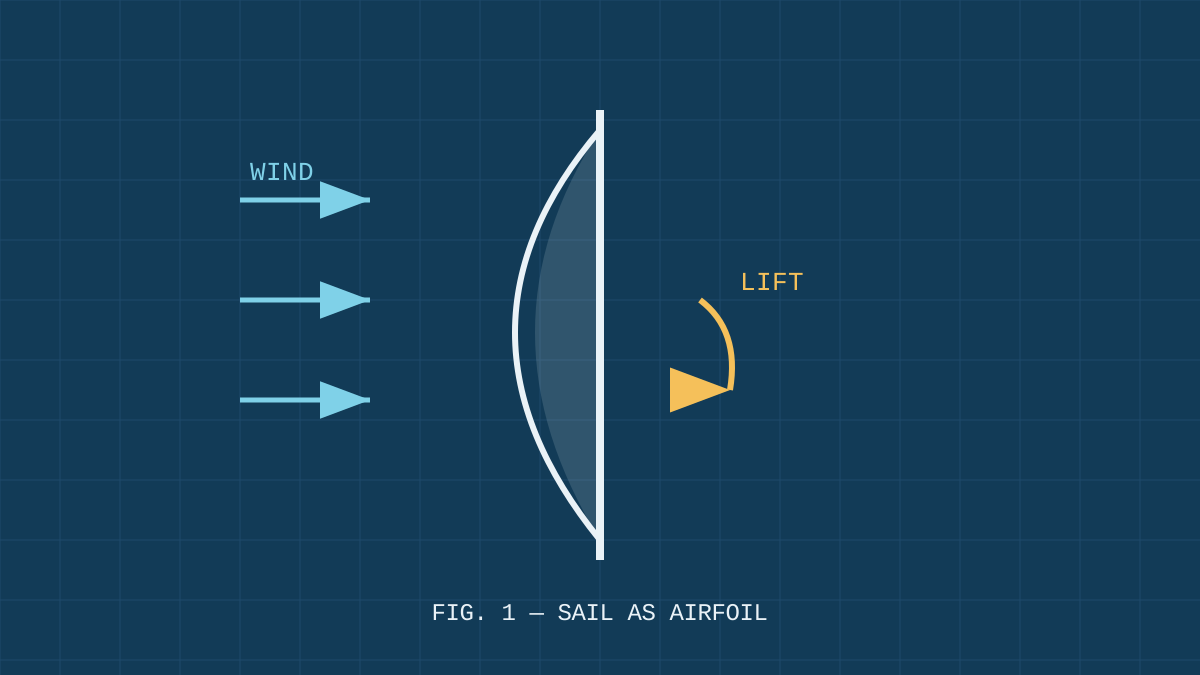
The sail is a wing
When wind flows across a properly trimmed sail, the sail's curve bends the air. Air following the curved leeward side speeds up and its pressure drops; the windward side keeps higher pressure. The result is lift — a force pulling roughly perpendicular to the wind across the sail, exactly as an aircraft wing generates lift from moving air. Except downwind, boats are pulled by their sails, not pushed.
The keel: the half everyone forgets
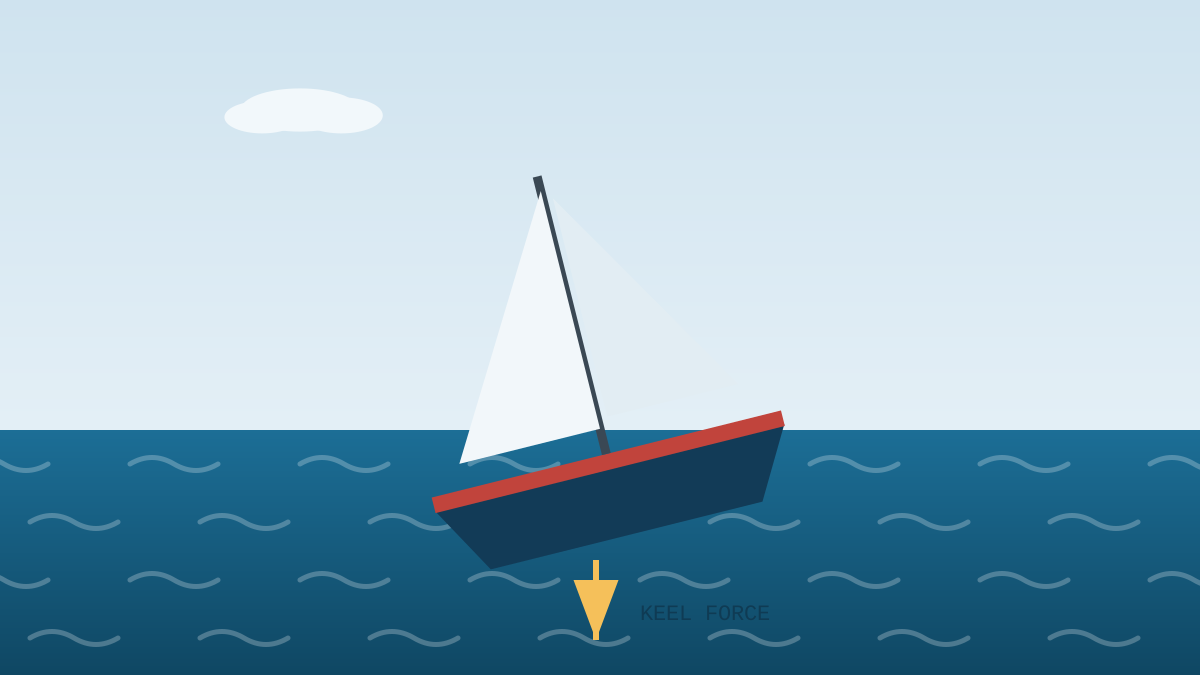
Lift alone would mostly shove the boat sideways. The genius is underwater: the keel or centerboard is a second wing, working in water, resisting sideways slip and converting the sail's force into forward motion. A sailboat is two wings in two fluids, and the boat advances along the seam between them. Ballast in the keel adds the righting muscle that lets the boat stand up to its rig.
Why you can sail toward the wind
Because lift, not push, drives the boat, it can sail surprisingly close to the wind — typically within about 45 degrees of it. Directly upwind remains impossible, so sailors tack: zigzagging across the wind, each leg angled but the sum progressing straight to windward. What looks like wandering is geometry doing its job.
Apparent wind: the wind the boat makes
A moving boat creates its own headwind, which combines with the true wind into the apparent wind — the only wind sails ever feel. Fast craft like catamarans and foilers accelerate until this self-made wind swings far forward, letting them ride at speeds that can exceed the true wind itself. It is the closest sailing comes to a magic trick, and it is pure vector addition.
Trim: flying the sail
Every adjustment on deck — sheeting in, easing out, tensioning the luff, flattening the curve — is wing-tuning. Too far out, the sail luffs and stalls like a flag; too tight, flow detaches and power dies. Telltales, the little ribbons on the sail, are the pilot's instruments showing whether air is flowing smoothly. Racing crews obsess over trim because inches of rope translate into boat lengths at the finish.
Conclusion
Sailing is applied fluid dynamics old enough to predate the vocabulary for it. Wing above, wing below, two flows balanced by hand and eye — once you see it, a beating sailboat stops looking quaint and starts looking like what it is: the most beautiful physics demonstration ever put to work.
Frequently Asked Questions
Can a sailboat really sail against the wind?
Not straight into it, but close to it — typically within about 45 degrees. By zigzagging (tacking) across the wind, a boat makes progress directly upwind.
Why don't sailboats tip over?
Ballast keels or wide, stable hull forms create a righting force that grows as the boat heels. Dinghies rely on crew weight instead — which is why their sailors hike out.
What is apparent wind?
The wind the boat actually feels: the combination of the true wind and the wind created by the boat's own motion. Fast boats sail by apparent wind more than true wind.
Why are sails curved rather than flat?
A curved sail shapes airflow like a wing, generating lift far more efficiently than a flat surface simply blocking the wind.
Sources & Further Reading
- International Maritime Organization (IMO): imo.org
- US Coast Guard Boating Safety: uscgboating.org
- National Maritime Museum collections and references